
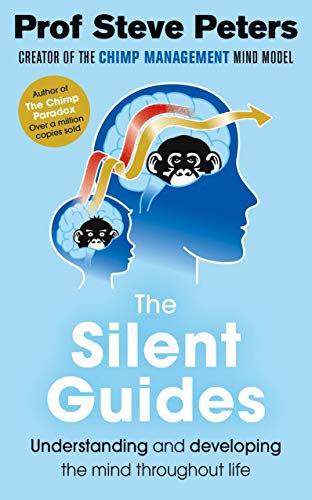
If you find yourself overreacting to situations, afraid to try new things through fear of failure or acting out of character. Then look no further than The Silent Guides.
The Silent Guides is a follow-up book to the Chimp Paradox and a companion for the children’s book My Hidden Chimp written by psychiatrist Dr Steve Peters. It helps readers to understand how their minds developed and how we can replace unhelpful beliefs learned in childhood with 10 healthy habits we can adopt. If you read it’s predecessor, The Chimp Paradox, you may have found the book potentially life-changing and helpful, however, the content is heavy side and takes time to read and understand. The Silent Guides addresses this with some basic neuroscience, theory of mind and straight to the point healthy habits to improve the quality of our lives.
The book starts with basic neuroscience of how our minds developed in childhood and the input of nature and nurture that forms our behaviours. As covered by The Chimp Paradox, it forms our brains into 3 parts, The human (logical and rational), The Chimp (emotional and impulsive) and The computer which functions automatically and is the reference source for both the human and chimp and is the stabilizer for both. The computer is an empty hard-drive from birth as helpful and unhelpful beliefs can be inputted. Being a parent/carer to a child comes with huge responsibilities of nurturing the child to form healthy habits and beliefs and any abusive or aggressive approach will only undermine their development. Children look to a carer for security and reassurance so the adult must be in a good place themselves to effectively become the human in the child’s mind. Although children can use some basic reasoning throughout their development, the role of the carer is paramount and I will now discuss 5 key takeaways from this book.

1. We can only recall our earliest memories from the age of 3
The chimp develops in the womb as early as 8 weeks into foetal life and stores emotional memory into the computer which means that we get feelings about something but can’t recall facts. For example, if a 2 year old child fell from a climbing wall, they can only recall that climbing walls make them nervous but they won’t remember why. Emotional memories can be linked inappropriately and can be unhelpful for the child and those around, this is common in animals as well as Peters uses the example of a puppy that experienced a fright when a gate slammed and a child happened to be standing next to it, since then, it became frightened of children even as an adult dog.
The human part of our brain doesn’t start developing until 3 years old and can continue up to the age of 30, the child’s computer has little experience to learn from so children can use sound judgement or be able to see the consequences of their actions so we can see a lot of unwelcome activity from the child’s chimp during childhood, this is where the parent takes responsibility to become the child’s human and programme their computer by inputting constructive behaviours, habits, values and so on.
Important Point: If a child is acting irrationally in a situation, they may be working on an emotional memory that they’re not able to recall.

2. Adults need to be able to distinguish a child from their chimp
This is a continuation from The Chimp Paradox about the fridge door goblin. Before the age of 8, the computer in our brain ingrains any input which means that beliefs inputted then can be firmly fixed and difficult to remove, children tend to struggle to manage emotions and the response from the adult can have implications to the child for the rest of their lives. Peters uses another example of a young girl being shouted at by her teacher on the London Underground for panicking about being on the wrong train and her classmates starting jibing at her before she burst into tears. He stresses the inability from some adults to see a child acting irrationally as being a “chimp hijack” and how this one incident can mean their she would develop a poor self-image and lack confidence.
Another example is when a child is answering back. It would be easy for a carer to jump to conclusions about a child being bad mannered and rude for answering back, however, it can be a lot more helpful if the parent/carer has a better understanding of child development. As mentioned earlier, children are unable to see the consequences of their action and don’t know what good manners are, if they haven’t practiced the habit of knowing what good manners are and why we display them, their chimp would take the lead and present the child as being rude, aggressive and challenging. Rudeness is later known to produce depression and sorrow in the person demonstrating it so it would be helpful if a parent were to sit down with the child when they are calm and relaxed to discuss what good manners are. They can include:
- Showing appreciation by saying thank you.
- Making someone fell welcome by smiling and saying hello.
- Using the word please and being polite.
- Being considerate.
- Respecting others and their property.
- Giving compliments and not making unpleasant remarks.
- Offering help to those in need.
- Not being selfish or greedy.
- Respecting cultural norms.
- Not gossiping.
Important Point: When a child answers back, they’re not intending to be rude, they just lack the interpersonal skills to discuss things in a tactful and polite manner.

3. Asking for help and teamwork is important part of self-development
Many children and grown-ups struggle to ask for help. This unhelpful behaviour is often learned in childhood and is carried forward into adult life, there are a number of reasons around this such as the fear of appearing silly, not knowing what type of help to ask for or fear of being condemned. Again parents and carers have a responsibility as children can go on the belief that asking for help is silly if the adult is being unreasonable, however, as a child’s mind is still developing, it cannot use reasoning to challenge this as some adults are unhelpful and unreasonable. Parents and carers have a huge responsibility to be reasonable to a child and encourage them to ask for help. Peters suggests some advantages of asking for help:
- Trying something first is good, but it is OK to ask for help.
- Wise people know when to ask got help so they can learn from others.
- Sometimes we can’t do something because we don’t have the expertise or knowledge.
- Other people can give us good ideas.
- Sometimes it takes two or more people to do something.
- Sometimes mistakes can be avoided if we ask others for advice.
- Sharing a task can help remove frustration.
Different types of help can come in many forms such as showing us what to do, work together, mentor us and so on. Asking for help is a constructive habit for children as they can develop teamwork skills, share ideas and have someone with the expertise to do something they can’t do. For example, if a child was trying to draw an animal but was unsure how to do it, you as the adult can step in and show them a picture of that animal and show them what to do.
For team tasks such as planning a recipe on how to bake a cake. Children can discuss ideas with each other, give information and knowledge and ask what if questions such as what if we don’t add eggs to the mixture and so on. Group tasks can bring benefits such as social and interpersonal learning as well as encouraging discussions and enhance understanding which improves critical thinking and learning by experience.
Important Point: Asking for help can remove the frustration of not being able to do something and is a constructive interpersonal skill to have.

4. Self-esteem based on best effort is more helpful than achievement
Imagine you are about to walk into an interview for a job that you really want. How would you feel if you base your success in getting the job? In this situation, you can do everything right but the intended may not occur because of factors outside your control e.g. what the company is looking for, whether another is more suitable etc. Basing self-esteem on outcome can effect you emotionally if things don’t go your way as the failure can be seen as catastrophic and make you feel like a failure. If you see everything in life as win or lose, then you must accept consequences.
Peters suggests a solution to this and that is focusing on doing your best. In this case, you can approach the interview with maximum effort and get perspective on the situation if the outcome was unsuccessful where you can learn from any mistakes made to come back stronger next time which increases resilience. By nature, the reason we tend to overreact to setbacks is that our chimp still believes it is in a jungle and that failure means that others will have a low opinion of us and perceive us as a failure. This is a common belief among children who are about to take exams, Peters has worked at Sheffield Uni medical school and has experienced many stressed students upon examination periods. He asked them to imagine living on a desert island all alone or just to imagine that the result was secret and known only to them, most students then wouldn’t be afraid of the result as they are basing their fear on what others think or not being able to cope with the consequences of failing.
Another issue with basing self-esteem on achievement is the sense of fulfillment. We believe that once we’ve achieved something we would be happy forever, however our chimp will soon dismiss the achievement which means that we become very critical of ourselves. The issue here is that the chimp uses achievement to be accepted by others, achievements are sensed as “not being good enough” and need to be complemented by further achievement. As discussed, this behaviour usually originates from childhood when we are praised for what we do rather than who we are which can effect our self-image. True friends like us for who we are rather than what we achieve, for example, you may never get a six figure salary or win an Olympic gold medal but that doesn’t mean there should be a low perception of you. Values such as being honest, trustworthy and committed are far more important with regards to basing self-esteem as you are likely to become more resilient and gain perspective on setbacks so achievement means a lot more.
Important Point: Basing self-esteem on achievements is a choice and can have emotional consequences whereas basing self-esteem on best effort and values can enable us to have a more positive outlook.
5. Not everything that has to be done will be pleasant
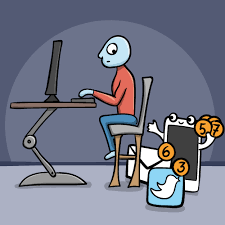
Do you ever find yourself procrastinating, if yes, then this could be because you are unable to manage feelings. The book uses the common example of an untidy bedroom and why a child is reluctant to tidy up and offers suggestions to the adult such as make tiding up into a game and operate on the same understanding as a child. However, getting started is usually the most difficult part, the problem here is that our chimp sees the task as overwhelming and too big to take on, making the first step easy is essential to getting started, for tidying the bedroom, this can be to tidy just one corner or to just pick up any clothes. Procrastination and avoidance is also common when it comes to studying, setting a limited study time of 15 minutes or to just tackle one learning section can reap benefits as the chimp would not resist as the task is small and can be completed in a short amount of time.
It is also natural to complain or moan when things don’t go our way. This is not helpful but can be effective to get things off your chest before you can listen to reason, this is best done with someone is understanding and will put some perspective to the situation. This will take less than 10 minutes to do and you’ll feel better afterwards and either find something positive to say about the situation and/or search for a solution to the situation. Children tend to think in black and white, for example. if a child says they hate school and can’t wait to leave, you can help them to draw up 2 columns of the good points and not so good points, then, they can appreciate that everything in life has it’s ups and downs.
Important Point: Not being able to manage feelings can prevent us from doing what we ought to do. Taking small steps is much more manageable for The Chimp
Final thoughts
All in all, The Silent Guides acts as a companion to the children’s book My Hidden Chimp and is much more condensed version of The Chimp Paradox. Taking the time to input helpful and constructive beliefs is an investment worth making if you want to develop a positive outlook on life, likewise, nurturing a child can be draining but it is essential that they feel unconditionally loved and are taught constructive habits and behaviours that help prepare them for adulthood. Being a parent is very akin to being a coach in sport, regardless of how good a coach is, it is up to the athlete to perform so children need to be helped to manage themselves as they grow up.
The Silent Guides and The Chimp Paradox has transformed my life in helping me have a positive self-image, not overreact to setbacks and so on. I would personally recommend reading the former first if you wish to see results quicker as it is much simpler to understand and can help you get to the root of some of your unhelpful behaviours and habits.
I will detail one important to finish off. If you are carer for a child, don’t assume that you told them something once that they’ll understand it. Constant repetition is important if you want to input helpful beliefs and behaviours into a child, likewise, if you want to make progress, you would need to constantly practise reinforcing helpful beliefs and values mentioned in the book if you wish to see progress. Patience and repetition is essential.

 The Real Talk blog
2 thoughts on “5 key takeaways from The Silent Guides”